
Top 5 Reasons Why Primavera P6 is the Industry Standard for Mega-Projects
Explore why Primavera P6 remains the undisputed king of project management software for complex, multi-million dollar construction projects.
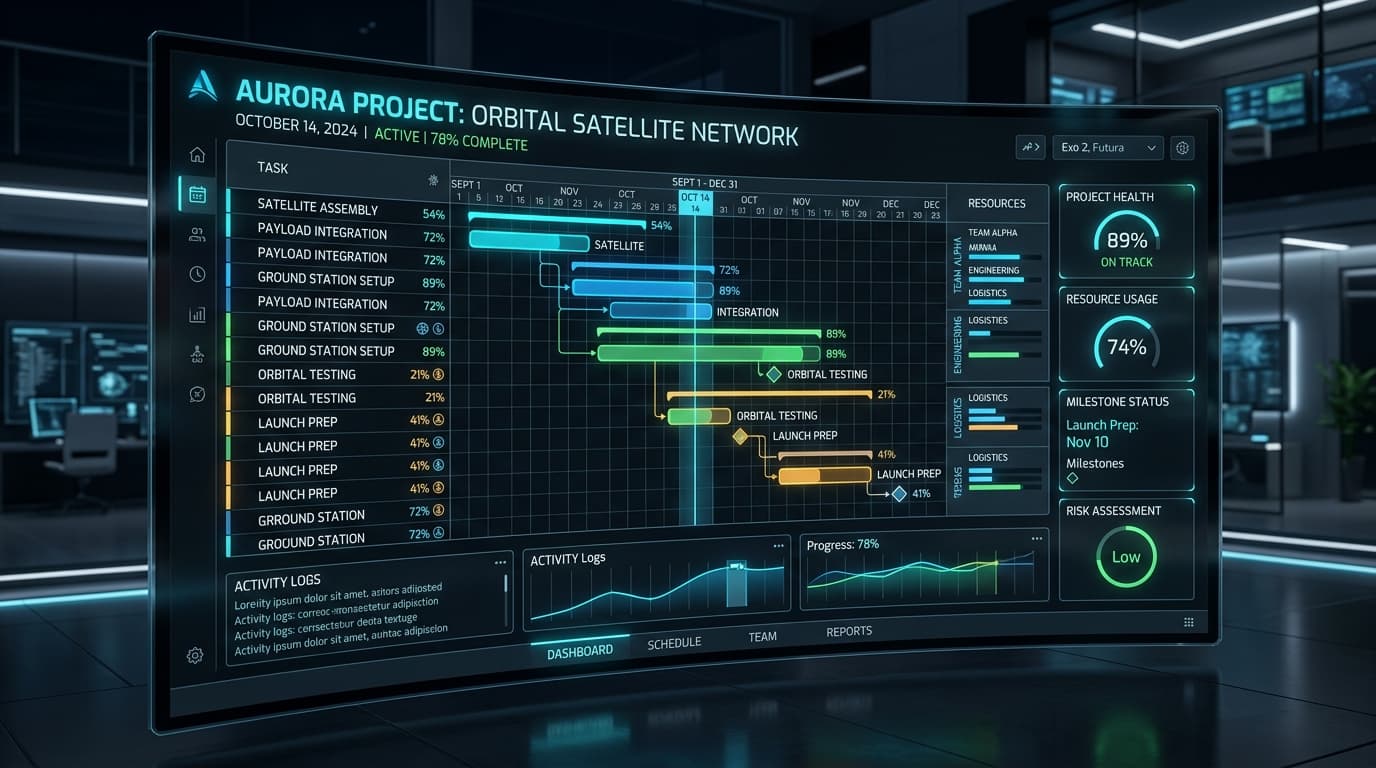
Primavera P6 has established itself as the undisputed king of project management software for complex, multi-million dollar construction projects. But why do industry giants consistently choose it over alternatives like MS Project? The answer lies in its unparalleled ability to handle massive datasets, complex resource leveling, and enterprise-wide portfolio management.
In the highly competitive world of mega-projects—think airports, dams, high-speed rail networks, and skyscrapers—a single day of delay can cost hundreds of thousands of dollars in liquidated damages. Planning engineers need a tool that doesn't just draw bar charts, but acts as a comprehensive database for every single variable on the site.
Industry Fact: Over 90% of ENR Top 400 Contractors utilize Primavera P6 for scheduling and resource management on projects exceeding $100 Million.
1. Enterprise-Wide Portfolio Management (EPPM)
Unlike standalone scheduling tools that treat every project as an isolated island, Primavera P6 EPPM allows executives and project managers to oversee multiple mega-projects simultaneously from a single database.
- Global Resource Allocation: Track critical equipment (like tower cranes or piling rigs) and specialized manpower across global projects to prevent double-booking.
- Risk Analysis: Identify portfolio-level bottlenecks before they occur. If concrete supply is delayed in one region, P6 helps you understand how it affects three different projects concurrently.
- Unified Dashboards: Generate real-time, customized reports for stakeholders. A CEO can see a high-level cash flow summary, while a site engineer sees their specific two-week lookahead schedule.
2. Unmatched Handling of Massive Datasets
Mega-projects are incredibly complex. A typical commercial high-rise schedule might contain 15,000 activities, while an airport terminal could easily exceed 100,000 individual activities.
Most consumer-grade scheduling software begins to lag, crash, or corrupt data when pushed past 10,000 lines. Primavera P6 is built on a robust Oracle relational database structure (typically SQL Server or Oracle DB). This architecture handles these massive, interdependent schedules without breaking a sweat, ensuring planners can update progress in real-time, run complex schedule calculations (F9), and perform what-if scenarios instantly.
3. Granular Security and Multi-User Access
In a large project, you don't just have one planner. You have dozens of planners, site engineers, procurement managers, and sub-contractors who all need access to the schedule. P6 offers highly granular, enterprise-grade security settings:
- Role-Based Access Control (RBAC): Create specific user roles (e.g., Lead Planner, Site Engineer, Read-Only Client).
- OBS/WBS Restrictions: Restrict access down to specific Organizational Breakdown Structure (OBS) or Work Breakdown Structure (WBS) nodes. An MEP engineer can only update MEP activities and cannot accidentally delete structural concrete activities.
- Audit Trails: Maintain a strict, unalterable audit trail of every schedule modification, which is crucial during claims and disputes.
[icon:Target] 4. Advanced Resource Leveling and Smoothing
Assigning resources to activities is easy; ensuring you actually have those resources on site is the hard part. P6 excels at highlighting resource overallocations.
If your schedule requires 50 carpenters on a Tuesday, but your site only has 30, P6 will flag this immediately. Through advanced resource leveling algorithms, the software can automatically delay non-critical activities to smooth out the resource curve, ensuring your schedule is physically buildable.
5. Seamless Earned Value Management (EVM) Integration
Cost and time are deeply intertwined. P6 seamlessly integrates cost loading with the CPM schedule to provide highly accurate Earned Value Analysis. By tracking Schedule Performance Index (SPI) and Cost Performance Index (CPI) simultaneously, managers get early warning signs of budget overruns months before the accounting department realizes it.
To master these advanced scheduling techniques and become a highly sought-after planning engineer, check out our Construction Project Planning & Scheduling program.